Spokane winters are hard on locks in ways that surprise people who moved here from the west side. Moisture gets into cylinders, freezes overnight, and at 7 am the key will not turn — or the fob will not respond because coin cells lose most of their output below freezing.
Frozen car door or lock
- Try every door and the tailgate — the sunny side often thaws first
- Push in on the door before pulling; it breaks the ice seal on the weatherstrip
- Warm the key in your hand or pocket, then insert gently — never force it
- Lock de-icer (isopropyl based) into the cylinder is fine; WD-40 is not — it gums up the wafers
- Do not pour hot water on the door: it refreezes and can crack glass
Fob works in the house, not in the driveway
That is the battery. Cold drops a CR2032's voltage enough that a fob on its last legs fails outdoors only. Replace it now; you will not get another warning. If the fob still fails with a fresh cell, hold it against the start button — see key fob not working.
Frozen house deadbolt
A deadbolt that was fine at 10 pm and stuck at 6 am has condensation frozen between the pins. De-icer or a hair dryer through an extension cord from a neighbour will free it; forcing the key snaps it in the lock and turns a five-minute problem into an extraction. After the thaw, a dry lubricant (graphite or PTFE) keeps it from happening again.
Snowed-in car keys
Keys dropped in fresh snow at the Mount Spokane lot or in a Green Bluff parking field are gone until spring. If it happens, do not dig for an hour in the dark — call, and we cut and program a new key at the car while you sit in the van and warm up.
What we bring in winter
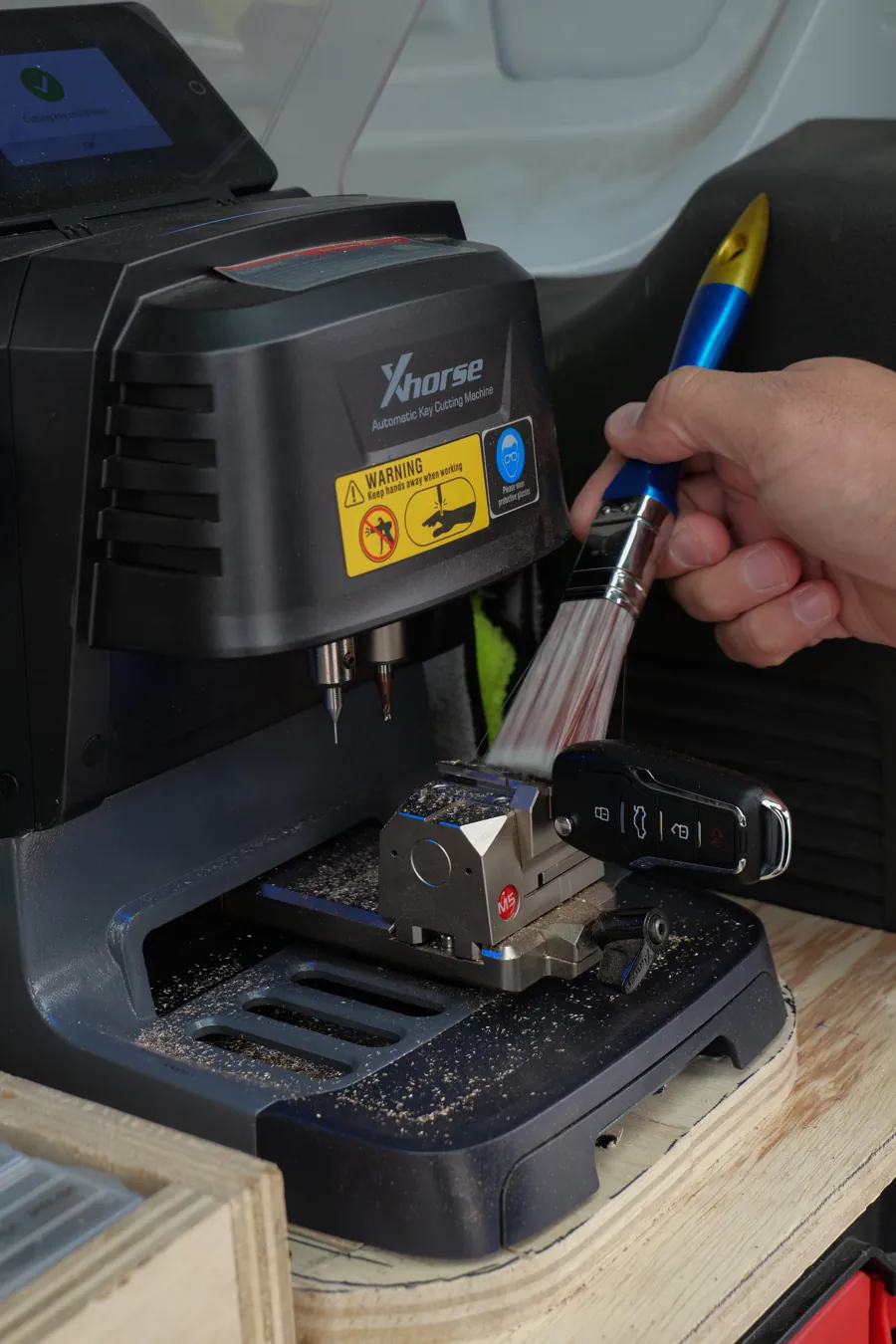
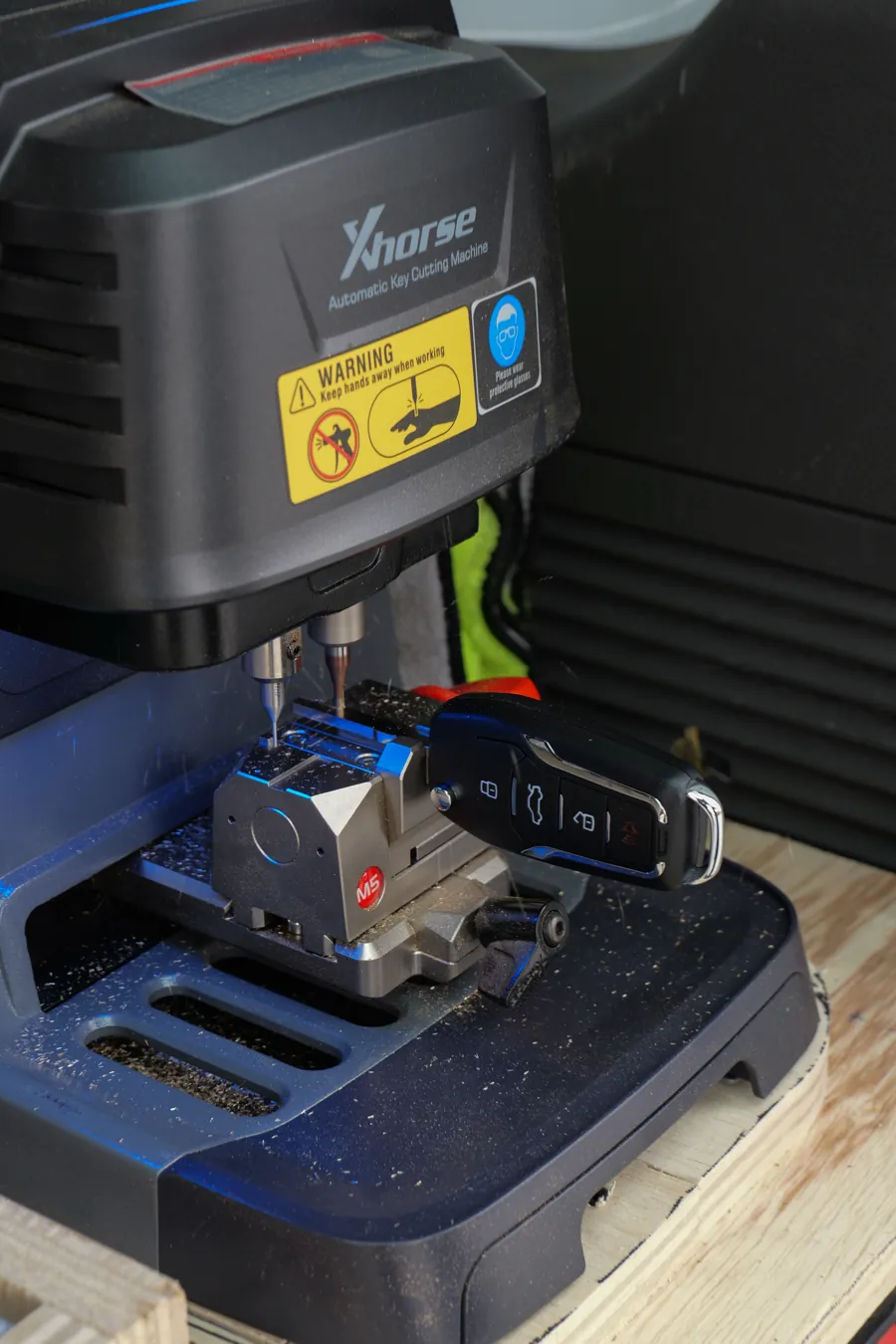
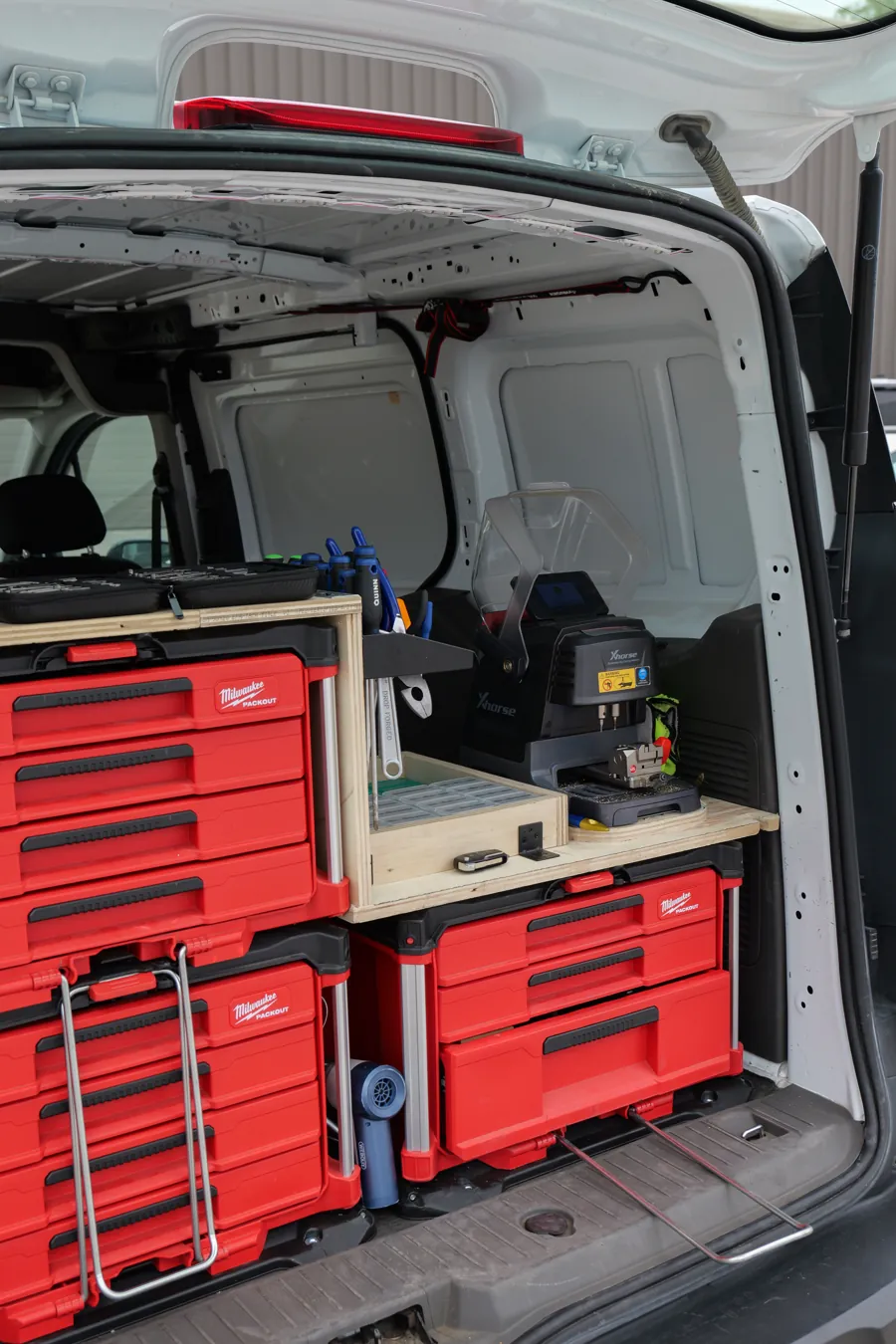
The van in the photo carries de-icer, a heat gun, broken-key extractors, a full set of blanks and the key machine, so a frozen-lock call ends the same visit whatever we find. We run 24/7 through the whole season including the holidays.
Before the first freeze: a ten-minute checklist
- New batteries in every fob and every keypad lock in the house
- Dry lubricant (graphite or PTFE, not oil) in every exterior cylinder and the car door locks
- Silicone on the car door weatherstrips so they do not freeze to the frame
- A spare car key that is not in the same coat as the main one
- Our number saved, not searched for at 6 am with cold fingers
Questions from every January
Should I leave the car unlocked in a hard freeze?
No — and you do not need to. Lubricated locks and treated seals do not freeze. Leaving it unlocked in a driveway on the north side is how catalytic converters go missing.
My key snapped in the frozen lock.
Stop. Do not push the stub in further with another key. We extract it and cut a new key from the pieces or the code in the same visit.
Does the keypad lock work at minus ten?
Commercial-grade units do; budget ones slow down and eat batteries. Keep the 9V jump contact free of ice and keep the mechanical key somewhere that is not inside the house.
We run through the storms
Snow days are our busiest days. The vans run winter tyres and chains, and we keep coverage across the county — including the hill neighbourhoods — when the plows are behind.