Almost every week someone in Spokane has a key copied at a kiosk, gets home, and finds the car will unlock but will not start. The copy is not faulty — it is just half a key. Here is the other half.
The chip you cannot see
Inside the plastic head of nearly every car key made since the late 1990s is a transponder: a glass or carbon chip with no battery that answers a radio challenge from the car when you turn the ignition. The car's immobiliser sends a code, the chip replies with its own, and if they match the engine is allowed to run. A key cut without a chip — or with a chip the car has never been told about — turns the lock but fails that handshake.
Cutting is not programming
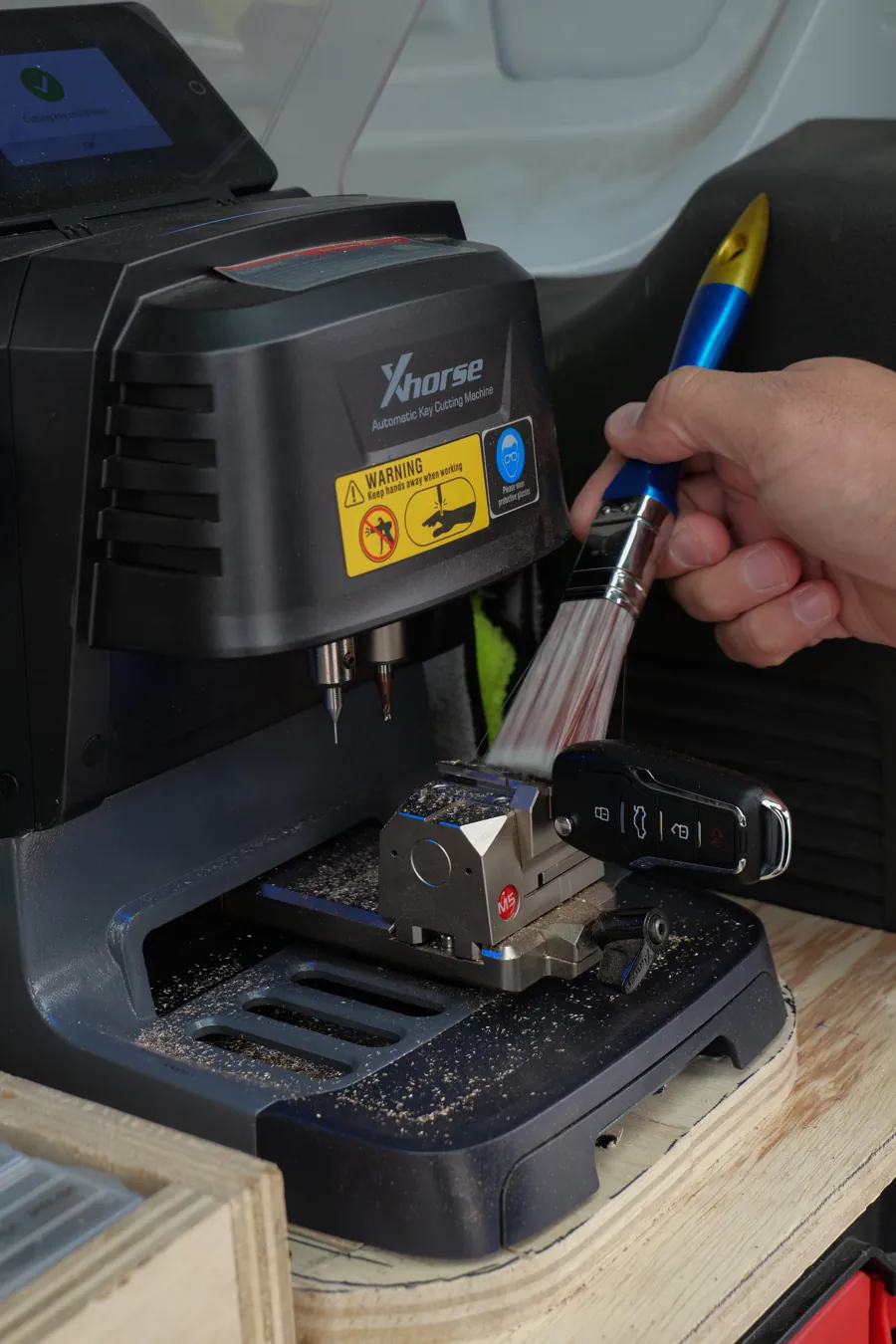
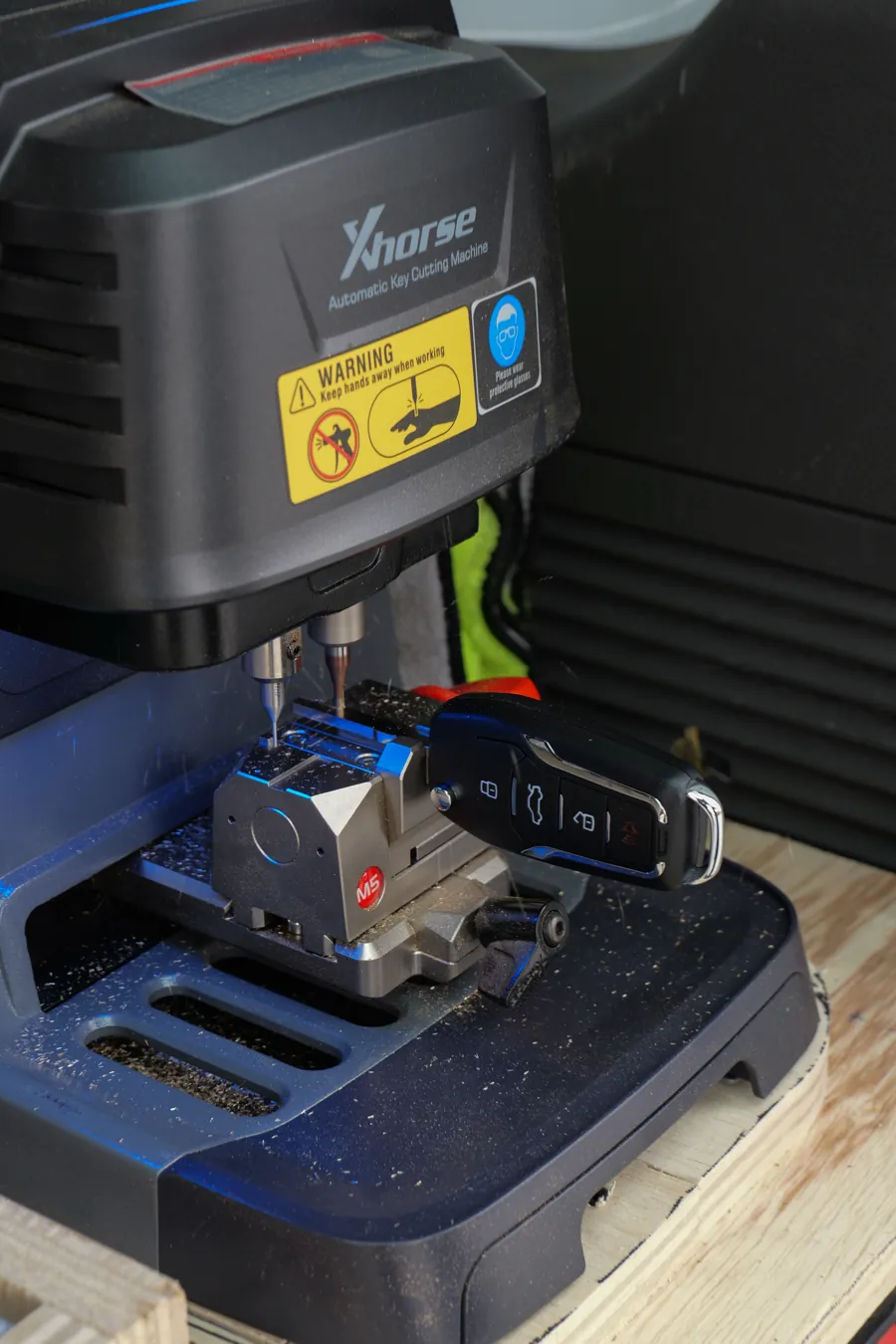
Two separate steps happen when we make a key. First we cut the blade so it turns the lock and ignition. Then we program the transponder: with a programmer plugged into the car's diagnostic port we tell the immobiliser to trust the new chip's code. Some chips are pre-coded and only the car is programmed; others (rolling-code and cloned chips) are written first, then paired.
Cloning vs adding a key
If you still have a working key, we can often clone its chip onto a new blank — the car cannot tell them apart and no programming session is needed. If you have no working key, we add a key through the OBD port, which also lets us delete lost keys from the car's memory. Cloning is quicker; adding is more secure after a loss.
What about push-start smart keys?
Same idea, more radio. A proximity fob talks to the car continuously so the doors unlock as you approach and the engine starts with a button. There is still an emergency blade hidden in the fob and still a transponder-style handshake — it is just wireless. Programming is done the same way, at the car.
Why this matters for spares
- A kiosk copy is fine for the door only — it will not start the car
- One programmed spare is the cheapest insurance against a lost-key call-out
- Cloning is possible only while you still hold a working key — do it before you lose it
- Lost keys should be deleted from the car, not just replaced
How to tell if your key has a chip
- Plastic head thicker than a house key: almost certainly chipped
- A small "+" or a letter code moulded into the head: transponder marking on many blanks
- Car built after about 1998 (US market): assume yes
- All-metal key on a pre-1998 car: no chip — a plain copy works
Questions we get
Can I program a key myself?
Some older Fords, GMs, Chryslers and Toyotas have an on-board procedure that works if you already have two working keys. With one or none, or on most cars newer than about 2012, it needs a programmer.
Why did the dealer say only they can do it?
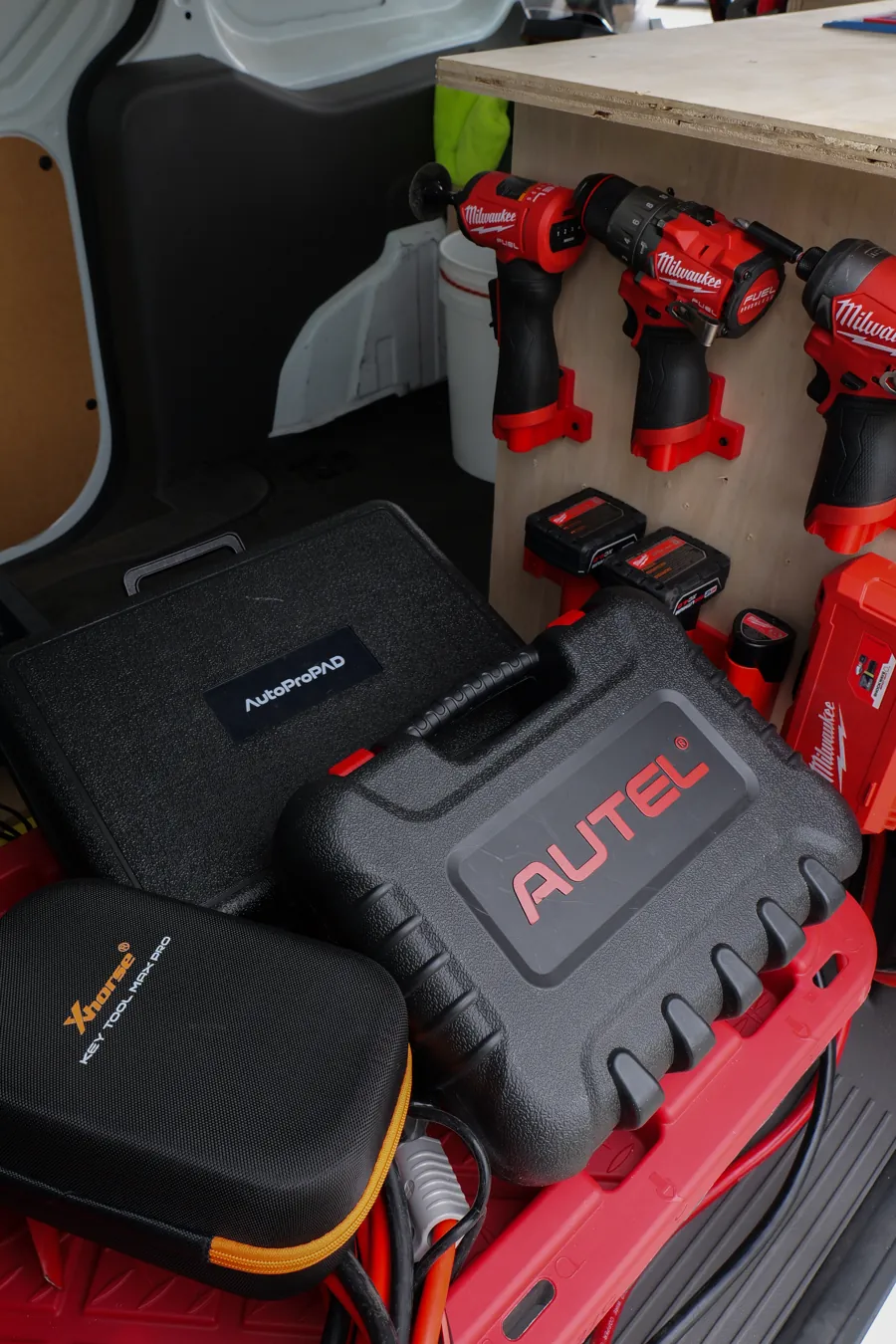
Because that is the business model. The programming tools we carry — Autel and Xhorse in the photo above — cover the same makes and, for most, the same functions. A few of the newest European models are genuinely dealer-locked; we tell you which on the phone.
Is a cloned key less secure?
No — it is an exact twin of a key the car already trusts. The security question is different: a clone does not let you delete a lost key, so after a loss we add a key and erase the old one instead.
The Spokane version of this story
Every week someone drives from a Division Street key kiosk to us with a copy that unlocks the door and will not start the car. We chip and program it — or cut a proper one — at the car, in the lot, the same afternoon.